

How To Purify Cursed Objects Ghost Of Tsushima
Laptop Mag Verdict
Ghost of Tsushima delivers fun sword fighting and a great story in a gorgeous open world, but information technology falls prey to some common complaints.
Pros
- +
Groovy sword fighting mechanic
- +
Strong story with memorable characters
- +
Beautiful open world
- +
Lots of character customization
Cons
- -
Some collectibles are unnecessary filler
- -
Lacks morality meter
Why you can trust Laptop Mag Our practiced reviewers spend hours testing and comparing products and services so you tin choose the best for you. Find out more than about how nosotros test.
What would you do to save your homeland? How much of your values would y'all sacrifice, if any, and do the ends ultimately justify the ways? These are the questions that weighed heavily on my mind every bit I made my fashion through Ghost of Tsushima. The latest IP from developer Sucker Dial and publisher Sony Interactive Entertainment is a third-person open up world, action-gamble stealth title that's both beautiful and brutal. Offering tense samurai duels, deep stealth mechanics and a compelling story set in 13th century Nihon, Ghost adds some new spins to open up-world games simply information technology still falls into some of the genre's traps.
The story of a samurai
Ghost of Tsushima takes place during the Kamakura period in feudal Japan. It'south a time frame marked past the prominence of the samurai, a course of warriors who lived by a strict code of award. You play as Jin Sakai, the last surviving fellow member of Clan Sakai, who from a immature historic period has trained in the way of the samurai at the foot of his uncle, Lord Shimura, the jito of the island of Tsushima. All's well until Khotan Khan arrives on Tsushima's placid shores declaring state of war in the proper name of the Mongol army.
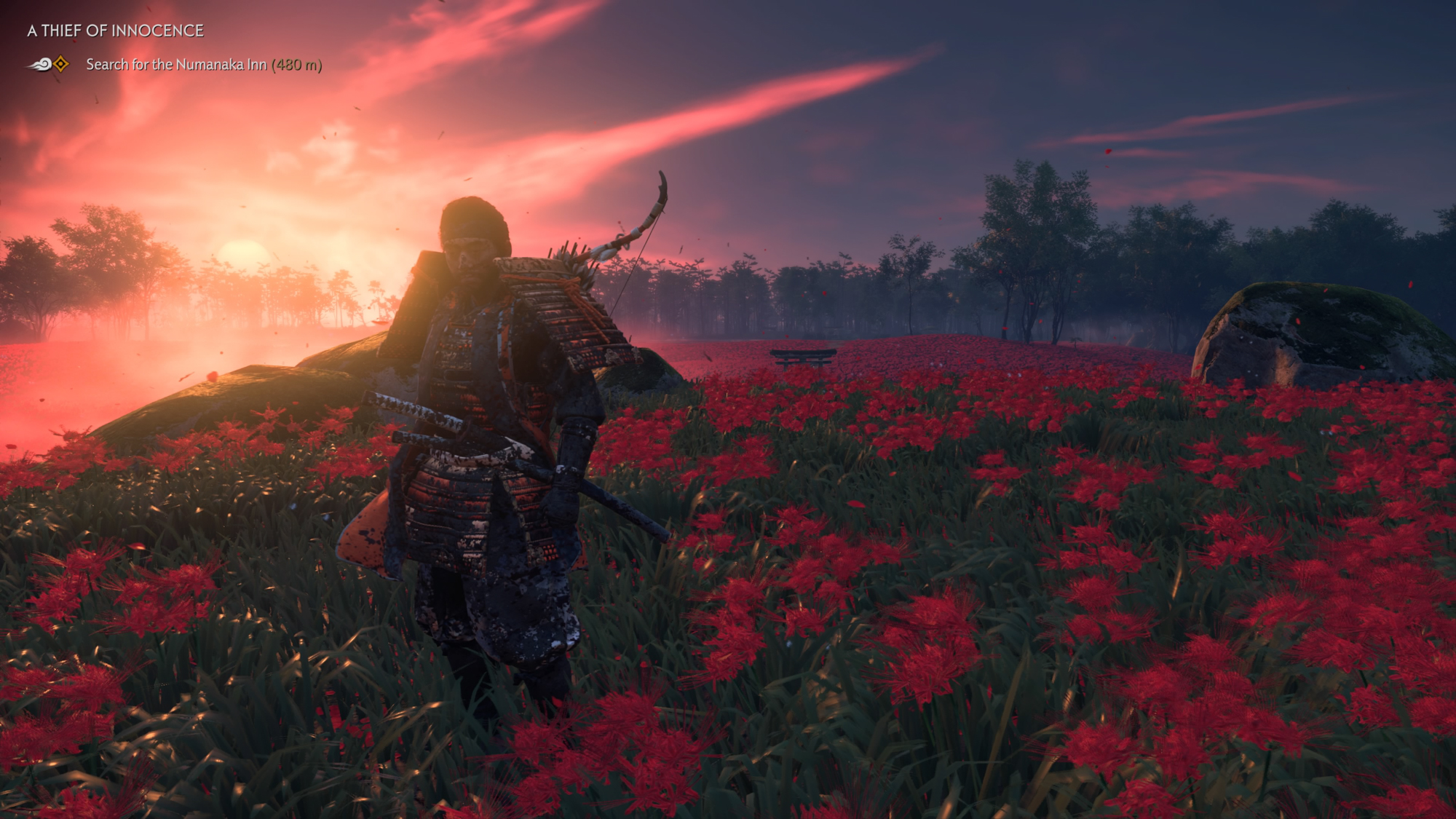
Every bit Tsushima is the leap-off signal for the Mongol invasion of Japan, Lord Shimura, accompanied by Jin and the Tsushima samurai, goes to face Khotun and his army in an endeavour to stop the invasion before it starts. Withal, Khotun is null if not cunning and calculating. Studying the rigid way of the samurai grade, his regular army hands defeats Shimura, destroying near of the isle's samurai and capturing the lord.
Jin is critically wounded and nursed dorsum to health by Yuna, a mutual thief who requests his aid in rescuing her brother from Mongol clutches. Jin agrees if she in turn helps him gratis Lord Shimura. While infiltrating the castle, Jin comes face up to confront with Khotun Khan, who promptly kicks Jin's ass and throws him off a bridge. Meeting back up with Yuna, Jin goes in search of help and a mode to topple the Khan because it's become painfully articulate that the way of the samurai might not be plenty.
Death and butterflies
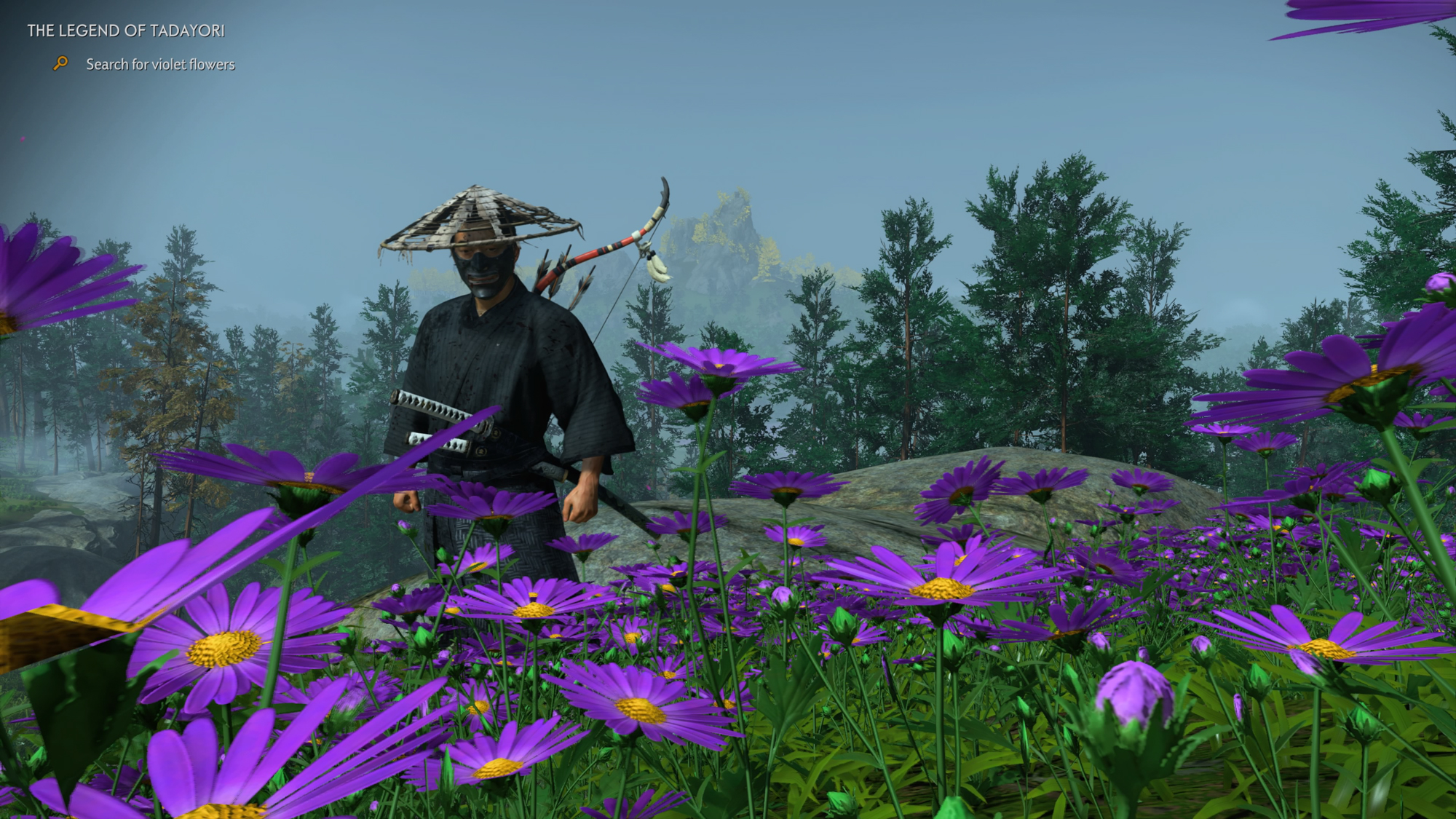
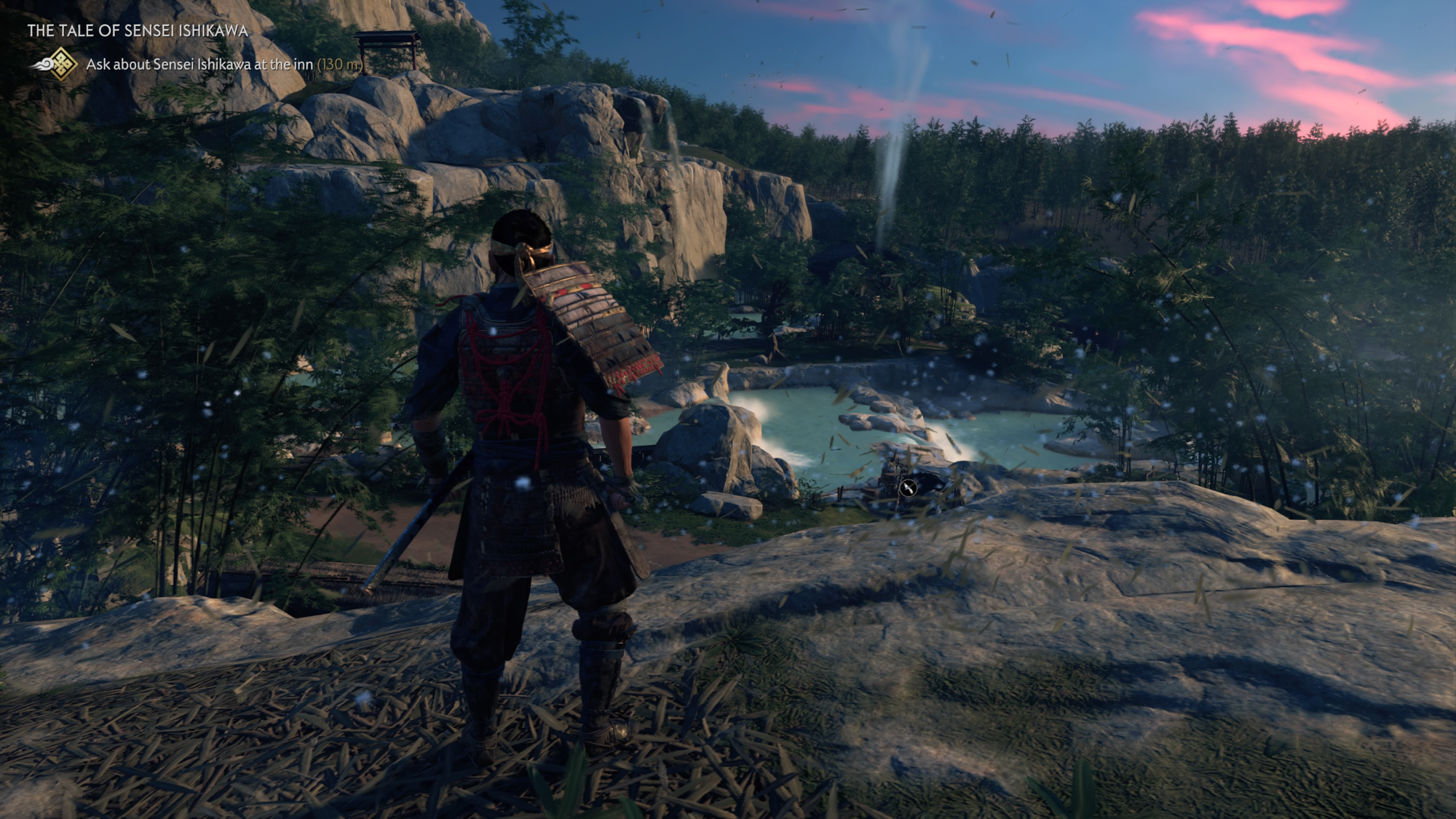
The world of Ghost of Tsushima looks absolutely stunning, specially playing on a PlayStation iv Pro with my 4K, HDR LG television. From the massive grove of ginkgo trees that make up the Gold Woods to mountains covered in gorgeous violet hyacinths, there is no end to the breathtaking dazzler of feudal Japan.
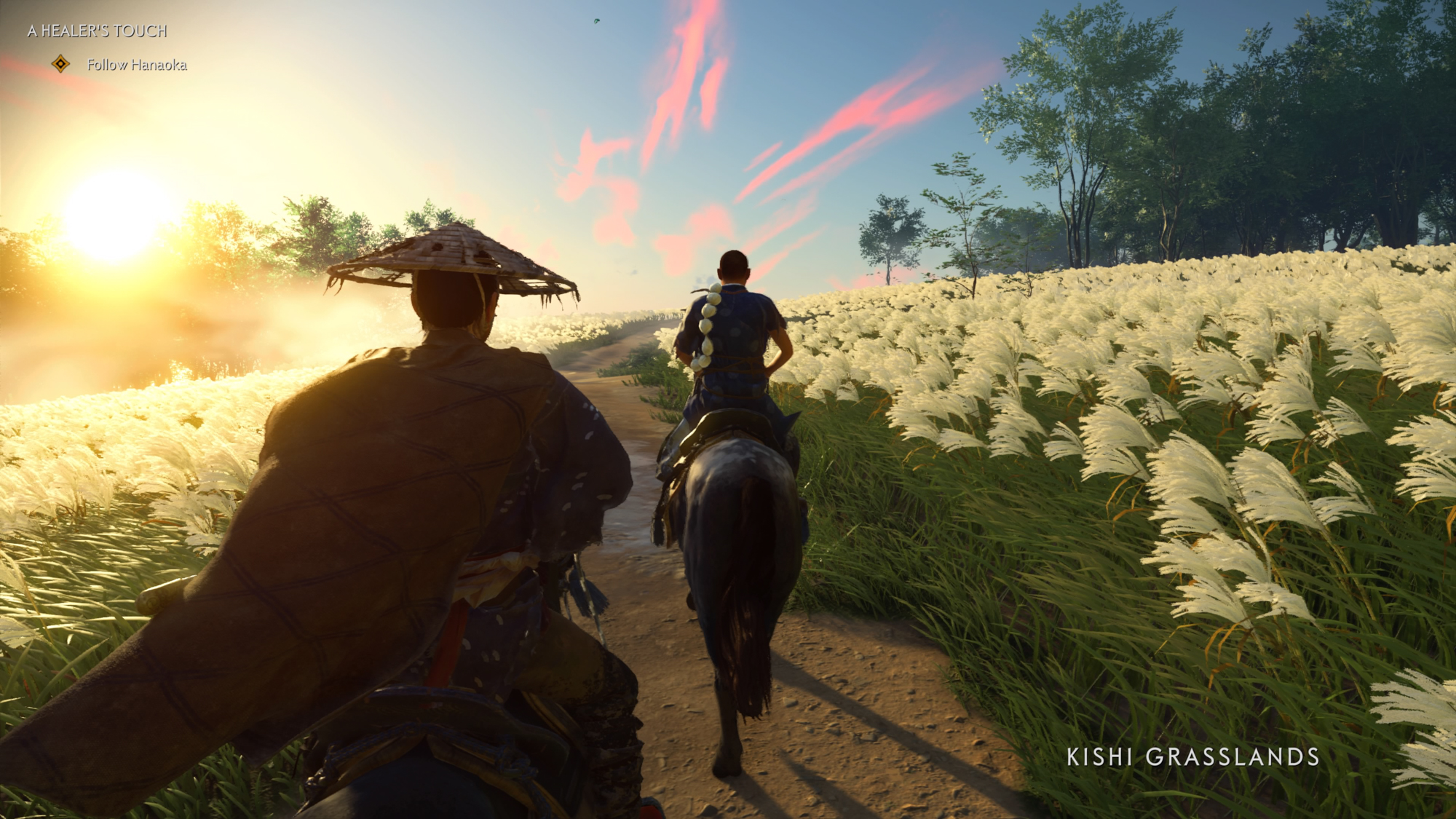
Notwithstanding, amidst all the lovely vistas, there's always evidence of the devastation acquired by the Mongol invasion. You only have to walk a short distance in whatsoever direction to see the charred, mutilated, dilapidated remains of your countrymen, left as a stark reminder of the situation. Still, I couldn't aid but adore the scenery. It felt like I was traversing a sea of molten burn down as I traversed a grove of crimson maple trees.
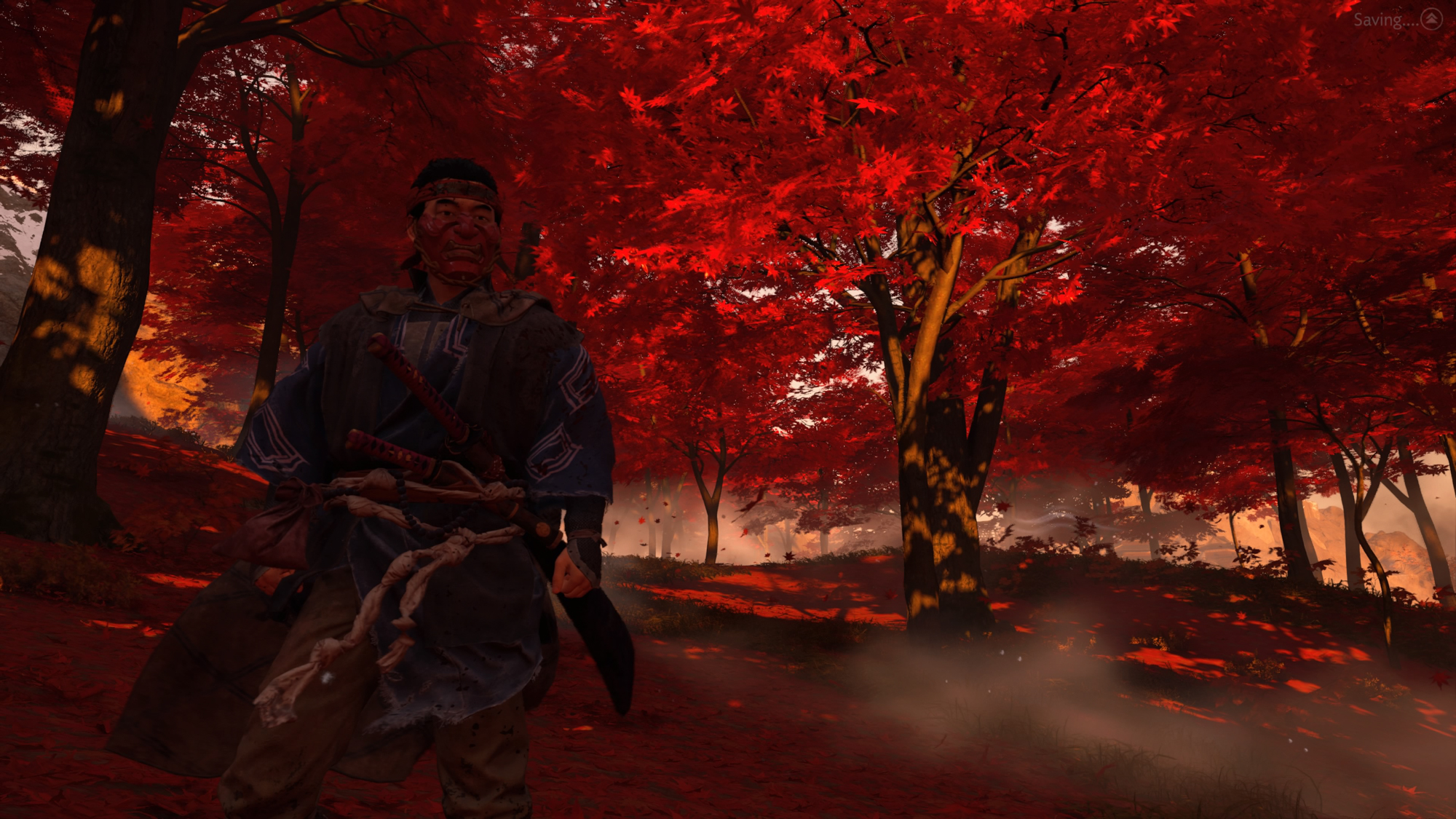
I was blown away by the sheer beauty of the deep red tones, especially during a moonlit night with the subtle fluorescence of fireflies lighting my fashion. The scene was capped off when I happened upon a sacred white deer. During the 24-hour interval, the fireflies were replaced by electric bluish butterflies.
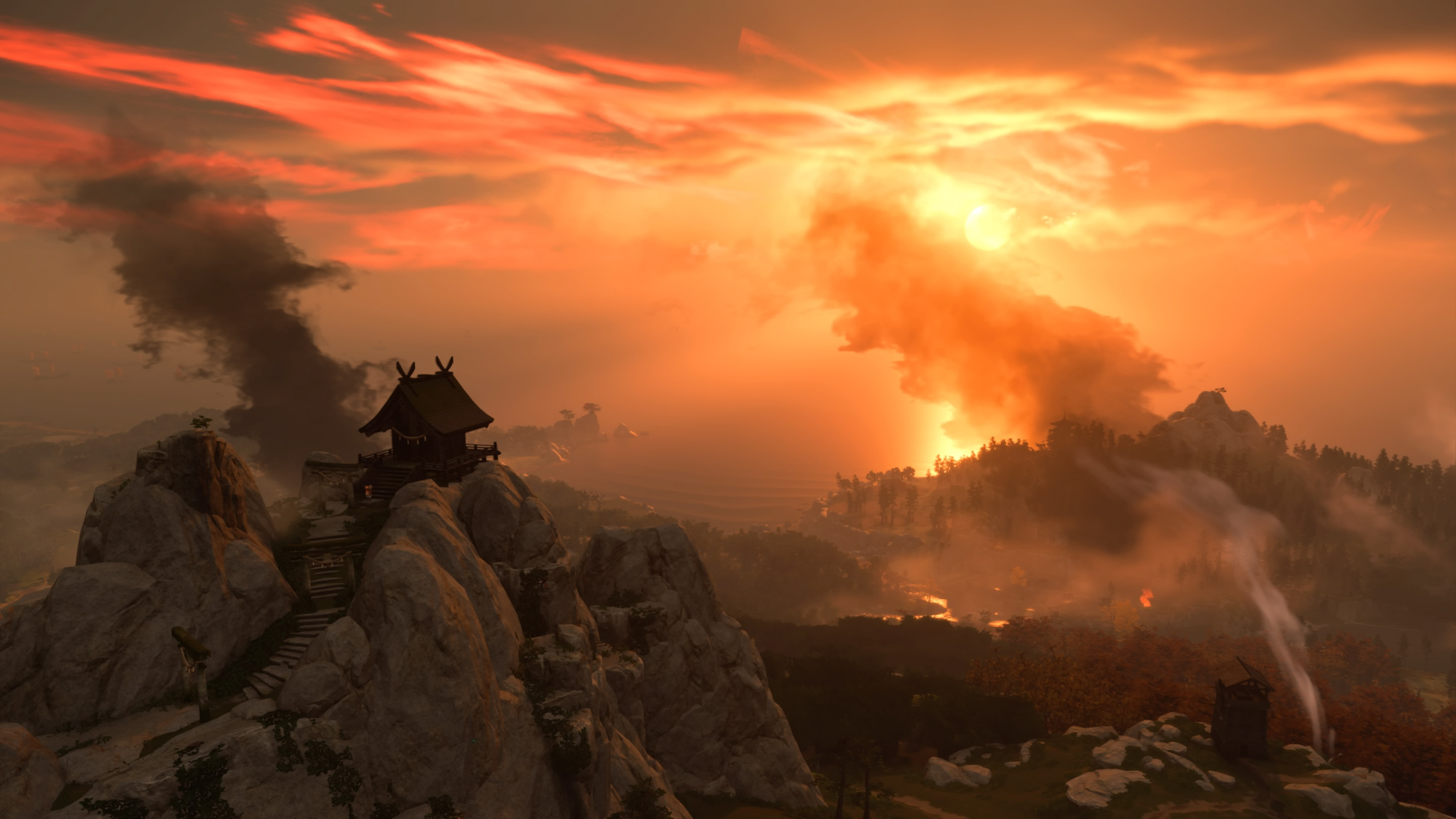
I was also impressed by the games' weather effects. Stay in any 1 area long enough and a swath of billowy clouds would roll in, replacing the once blueish heaven with grey clouds, heavy rain and violent lightning. Information technology was well-nigh striking watching the weather curl in and out on one of the game's many beaches.
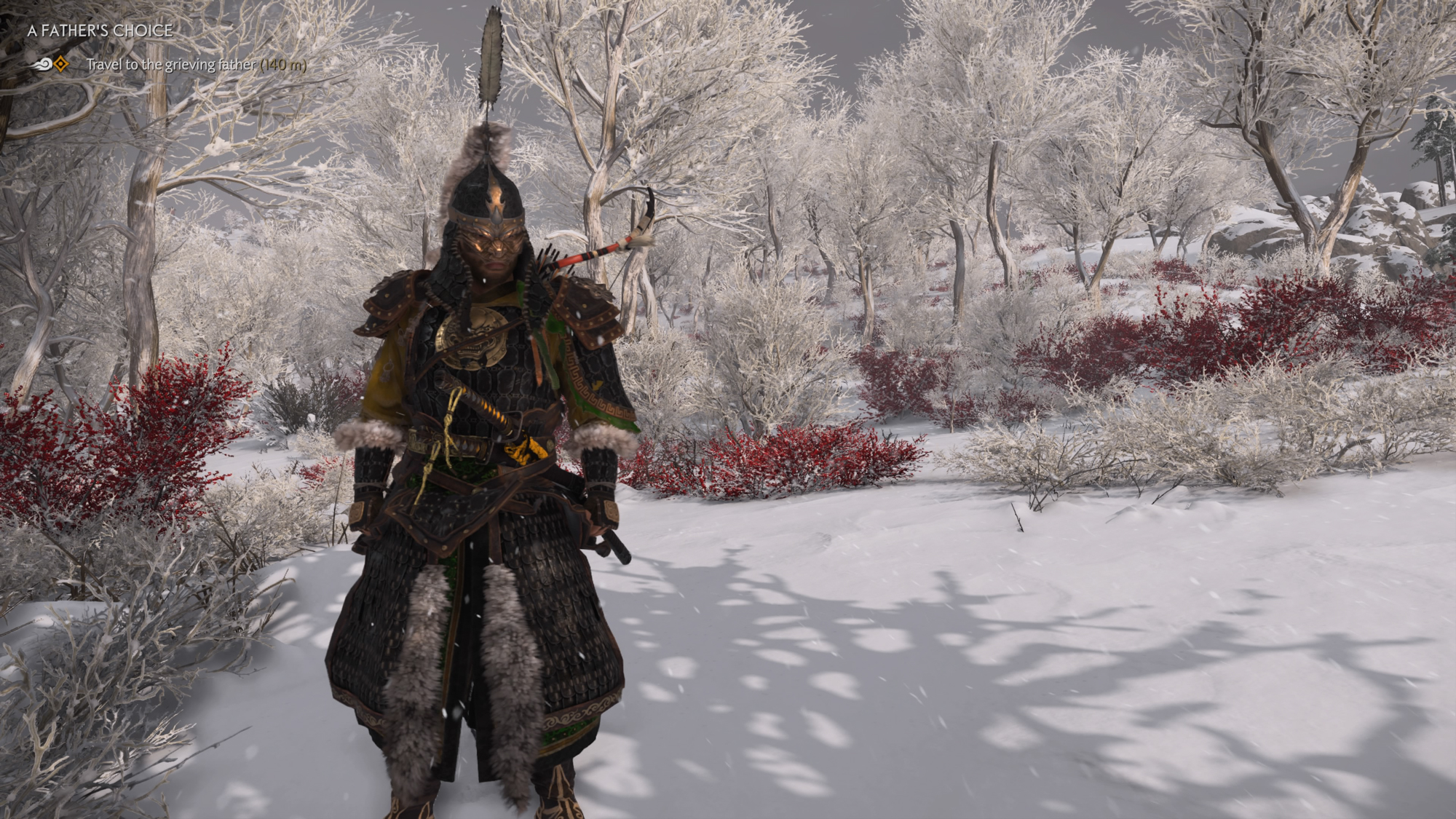
When it comes to the music of Ghost of Tsushima, less is definitely more. There were many times during my playthrough where the but audio accompaniment was the audio of the wind leading me to my next destination, the crunch of my footsteps on the leaves, or the heavy thud of my steed. So suddenly a flute would start playing, accompanied by cord instruments –– maybe a biwa or shamisen. Information technology's tranquil and belies the war taking place effectually me. During a fight, the music is much more energetic, punctuated past taiko, an ancient drum and more aggressive strings.
Duels and poison
Like most open-earth titles, how yous approach obstacles in Ghost of Tsushima is up to you. Do you infiltrate enemy areas with your stealthiest moves or exercise you go in brandishing your katana, taking on all challengers head-on similar a samurai? There are no wrong answers, only what sets Ghost apart from other games is the dueling mechanic.
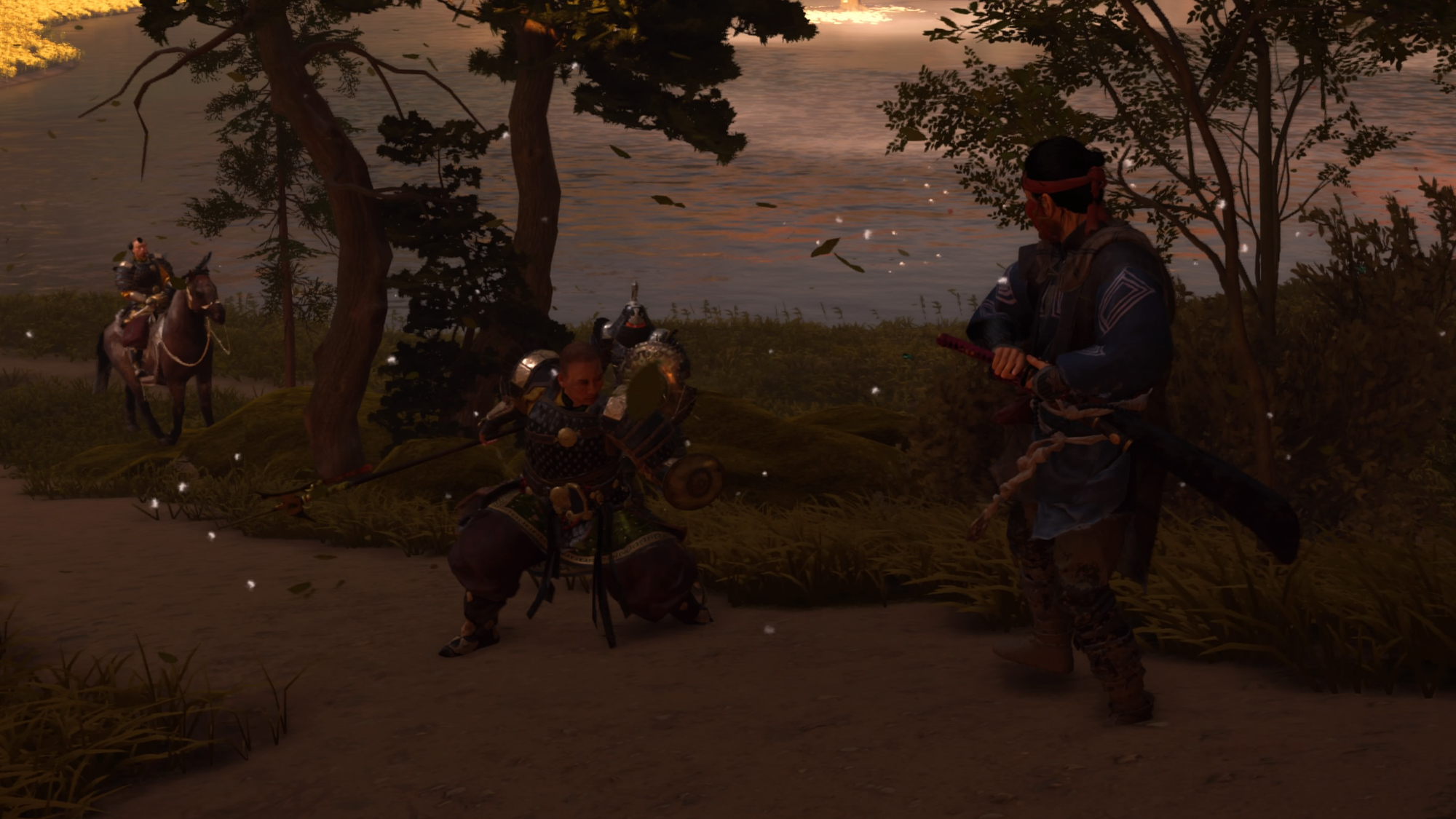
Information technology'southward by far my favorite part of the game outside of the story. Duels are everything you'd look –– dramatic and intense. In a duel, y'all get a closeup of Jin and his opponent as they set up to fight to the death. From in that location, it's a game of strategic strikes, blocks and parries as you battle to exist the terminal person continuing. Duels further forth in the game are unsurprisingly more difficult every bit your opponent will ofttimes pull out unblockable attacks that you quickly have to contrivance or counter with your own. I'thou not going to lie, I had to replay multiple duels several times because I was getting my barrel handed to me.
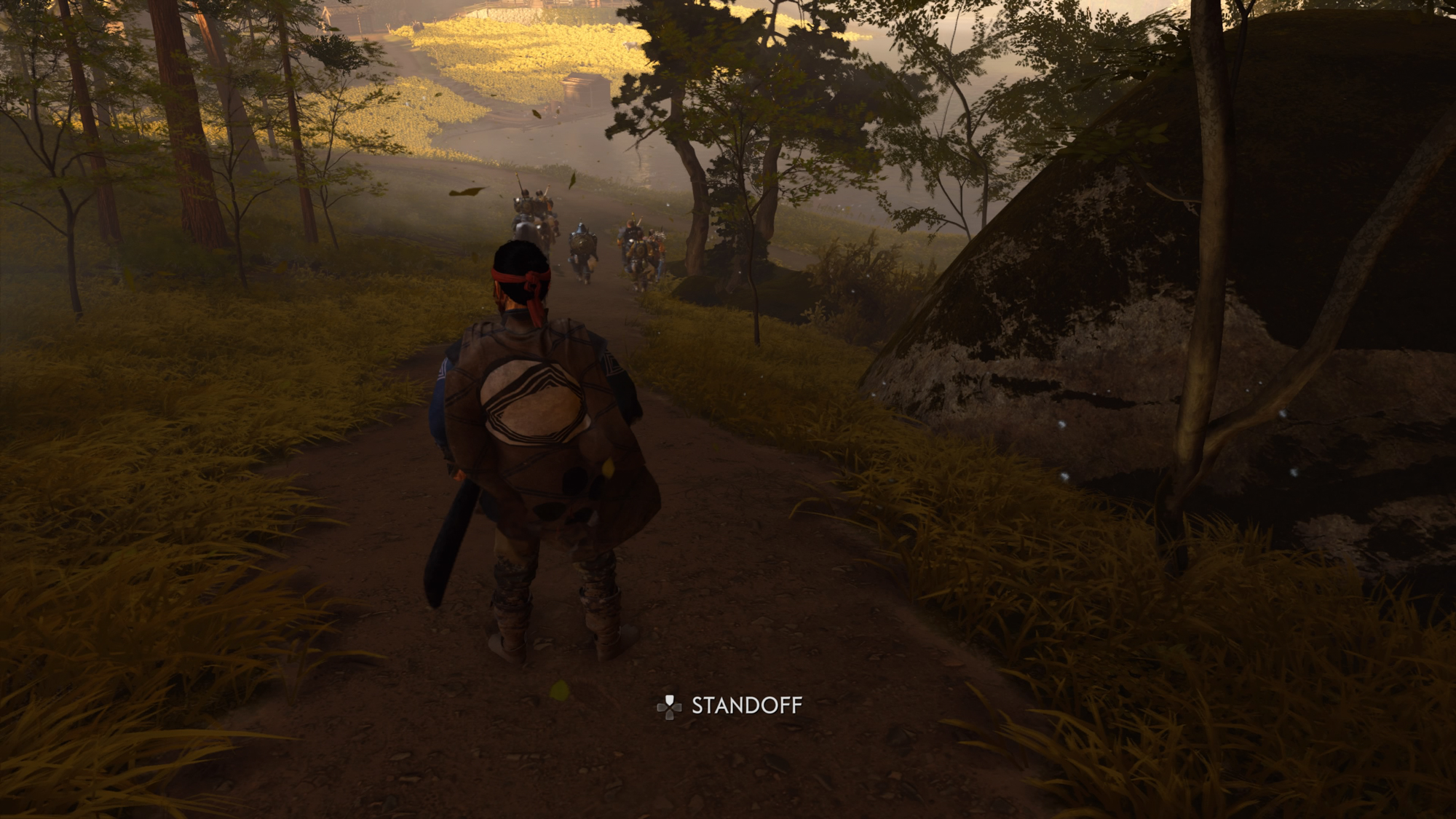
Whether you're retaking a fort or just traveling the lone roads of Tsushima, if you encounter any of Khotun Khan'southward forces, you can initiate a Standoff come across. A Standoff allows yous to approach one of the Khan'south men in a face-off. When initiated, you accept to hold downwards the triangle push and expect for your foe to strike. Do it right and they're dispatched with a cute dull-motion strike, complete with a glorious splash of blood. Yous can accept out up to four enemies this way, up to 4 enemies, with the number of victims dependent on your upgrades and equipment.
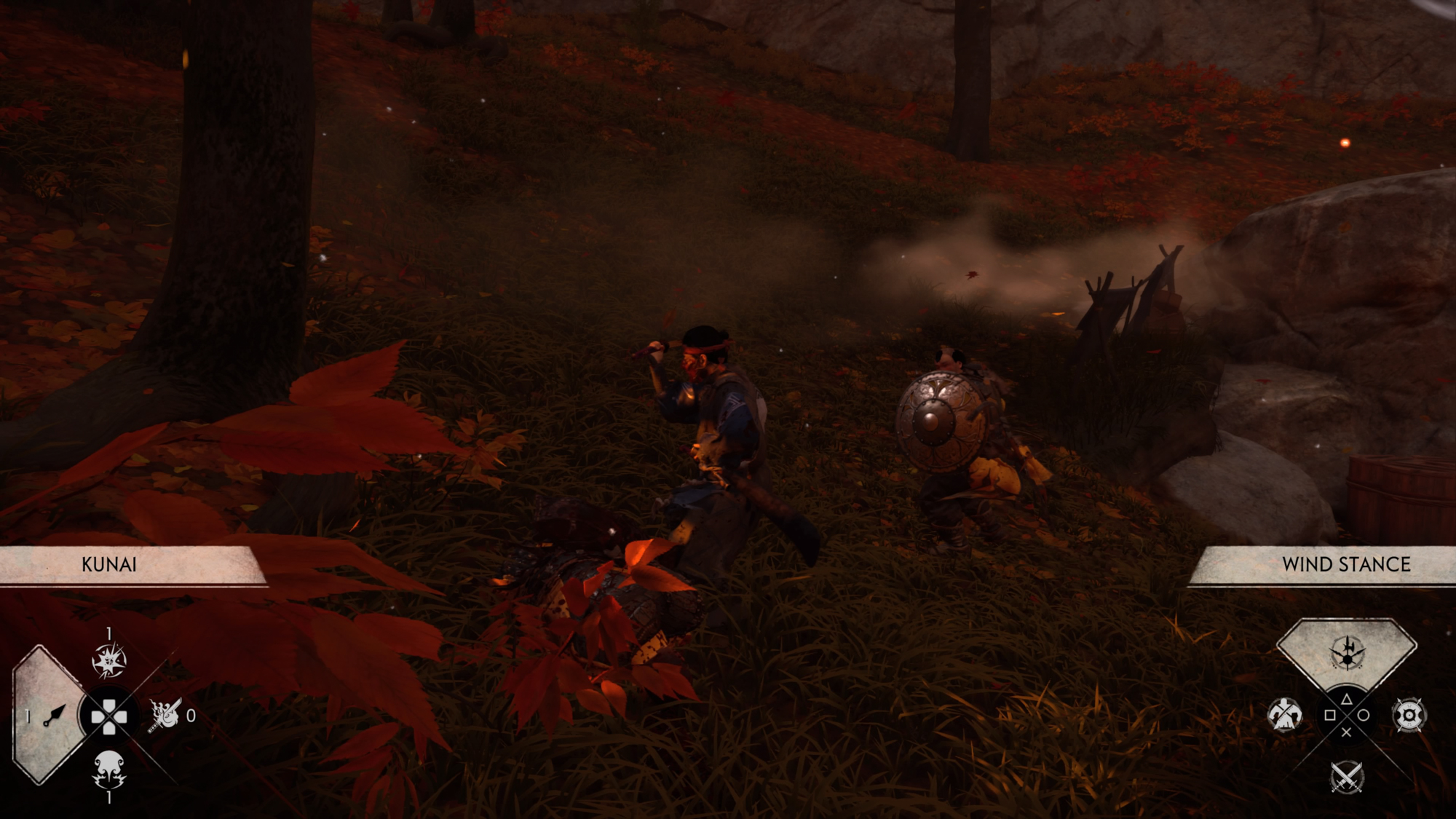
When you're fighting a band of bandits (and non in a standoff), yous can use Jin'due south four fighting stances to help you lot deal with foes more effectively. You've got i stance for swords, another for spears, one for shields and another to deal with massive brutes. Mapped to the confront buttons and the correct trigger, switching between stances was tricky at outset, merely I was moving betwixt them pretty seamlessly by the terminate of the game.
If you're a stealth player, equally I tend to be, the alpine grass and your one-half bow are your closest friends. Sneaking around enemy bases was thrilling, peculiarly once I got shut plenty to pull off an assassination or two. But again, as you progress farther in the championship, the tools in your stealth arsenal aggrandize, allowing for much more creative kills. In one example, I weaponed a simple air current chime, making it spew a poison cloud at whoever was foolish enough to investigate the noise. It definitely reminded me of Tenchu: Stealth Assassins. I only wish they had poison rice balls like the 1998 title, as it would have been a great way to deal with the Mongol'due south dogs.
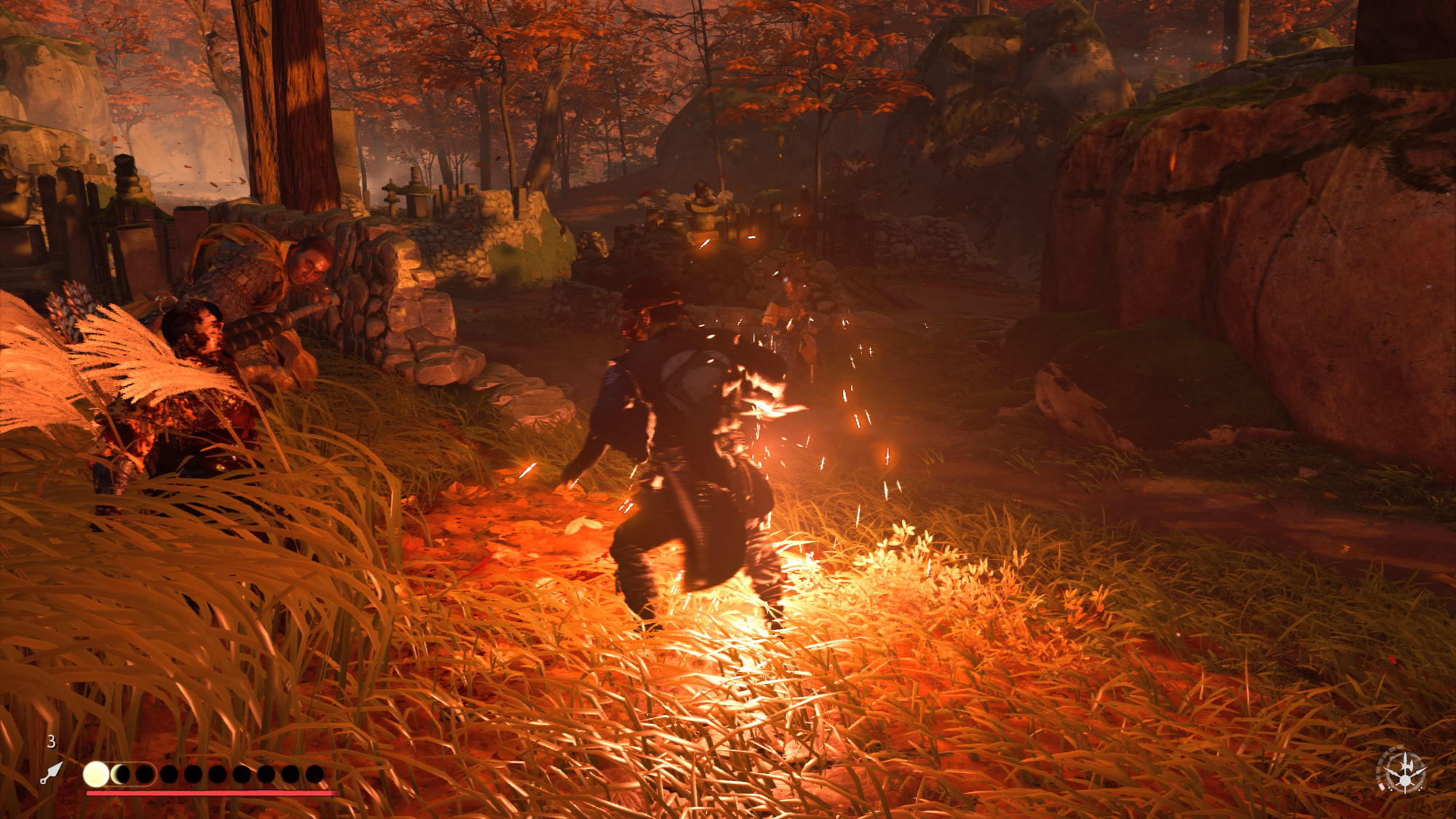
Jin has a health bar and a Resolve meter. Resolve is what allows you to perform more powerful techniques every bit you progress through the game. Information technology'due south also used to revive yous in case Jin's bested by a foe in boxing. You beginning the game with iii orbs of Resolve, but like your health bar, finding certain areas in Tsushima volition increment your Resolve, and then be on the lookout.
At that place are points in the game where you lot fight aslope an marry or two. While the help is definitely appreciated when fending off waves and waves of Mongol fighters, I do have a pet peeve. While I can revive my allies by pressing the R2 button, in that location's no such support for myself. Fifty-fifty when I didn't have plenty Resolve to revive Jin, my allies would keep fighting, disregarding my distress until the inevitable death blow came and I had to restart the mission.
In his quest to gratis Tsushima from the clutches of Khotun Khan, Jin has a fairly robust collection of weapons and abilities to win the twenty-four hour period. First off, you have your katana, a two-handed sword used for head-to-head gainsay. Then you have your wakizashi, or brusque blade, which is wielded for stealth kills. For ranged combat, you'll get a half bow, which has access to a number of dissimilar arrow types throughout the game, including fire arrows.
And then at that place are your Ghost weapons. Unlike your katana and wakizashi, your Ghost weapons are decidedly unbefitting of a samurai and fall more in line with what you'd expect a ninja to wield. At that place are fume bombs, kunai (throwing knives) and black powder bombs just to proper noun a few. And yes, while using these weapons might non be the "Samurai way," and then to speak, I tin can't contend against their effectiveness when fighting Mongols. There were many times when I was going to be overwhelmed by enemies and a well-placed kunai provided enough crowd control to turn the tides in my favor.
So many collectibles
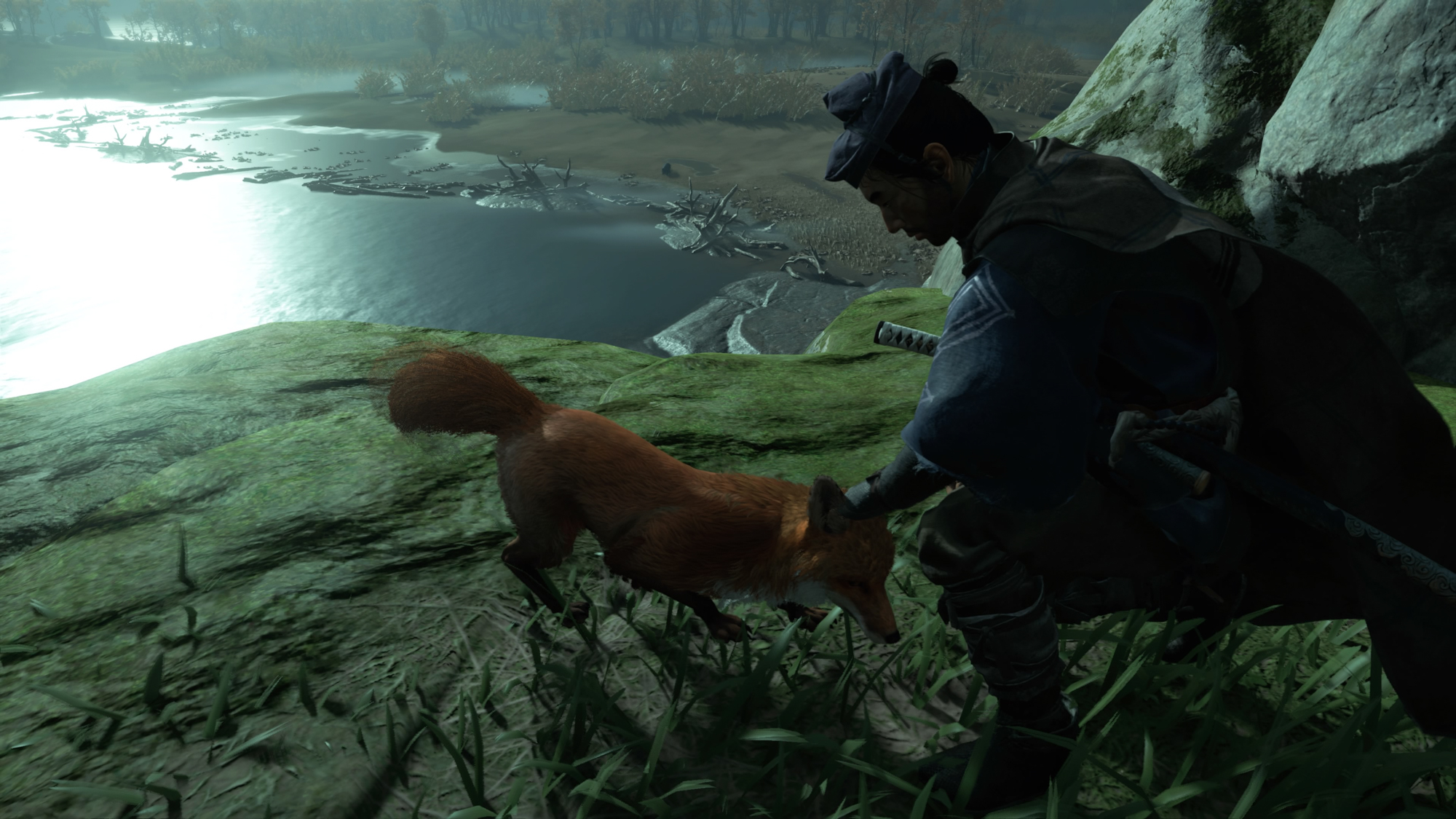
The isle of Tsushima is broken up into iii distinct districts, each crammed full of upgrades and collectibles. I definitely recommend taking some time off from the main missions to chase for upgrades, such every bit Bamboo Sword Grooming stands and Hot Springs, as they tin can increment your Resolve and impact how much wellness you accept. Yous should also be on the watch for shrines and fox dens as both can honor charms that augment passive abilities.
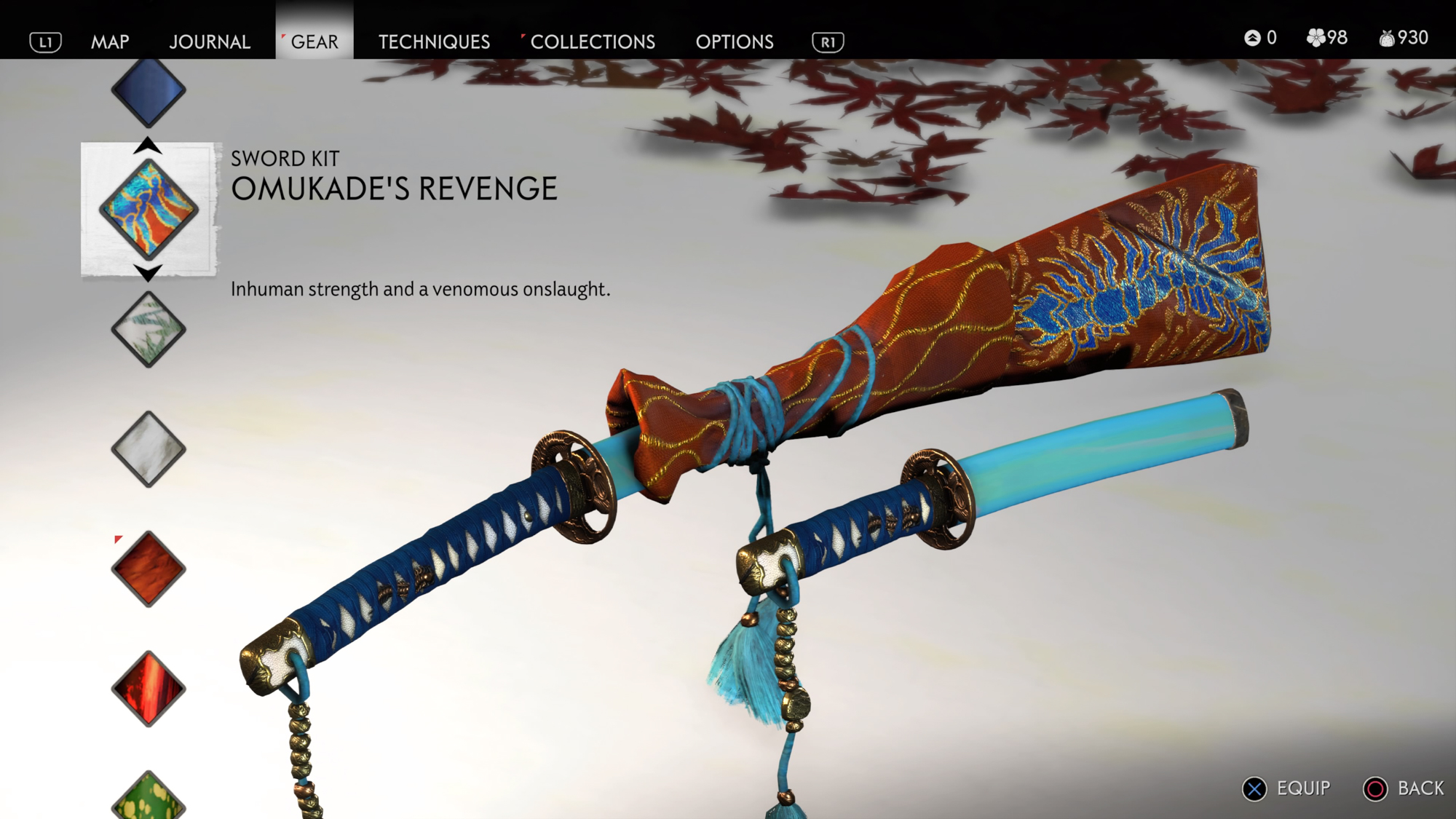
These are some of the useful collectibles, but in that location is, unfortunately, some unuseful gear floating around the game. While I dearest the haiku areas, which literally allow yous arts and crafts your own haikus while reveling in the jaw-dropping beauty of the game, the advantage of a headband just doesn't cut it. I could see it if the headbands granted some absurd power (and with a name like the Headband of Chaos, how does information technology non?), merely nope, they're all for cosmetics. The same goes for the sword kits found at the Pillars of Hope. Notwithstanding, I did switch my swords' appearance often merely to run into how absurd they looked during duels (Spoiler: They looked really cool).
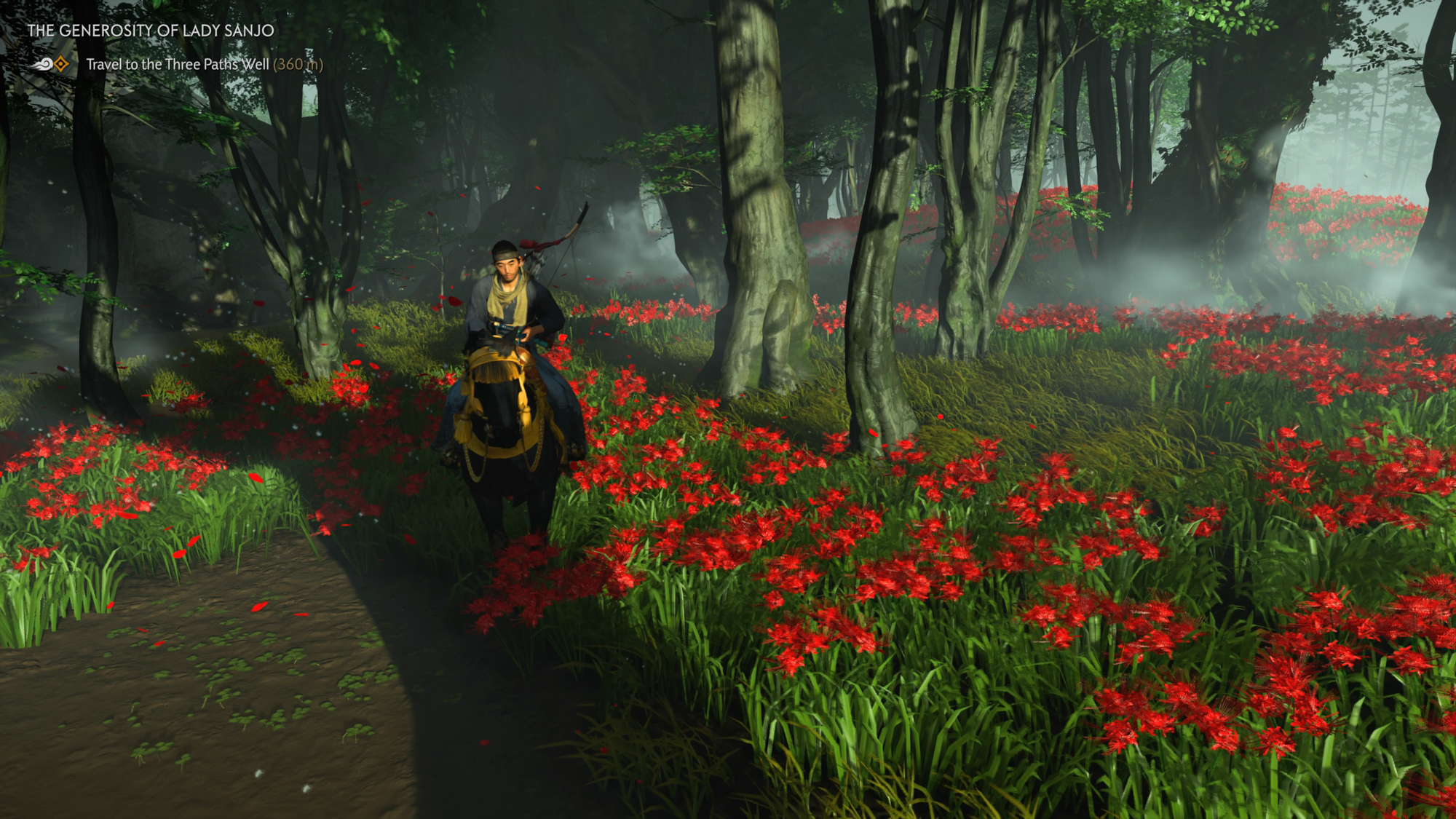
Although it'southward fun to jump on your equus caballus and ride effectually to see what you tin find, the easiest way to find all those points of interest is to articulate out enemy forts. Once you totally liberate an area, the entirety of the commune map will be revealed. However, I do concede that the headbands, flags and other collectibles are ways to pad this open world. It's a blueprint characteristic that I hope developers volition retire sooner than after equally it introduces tedium into an otherwise fun experience.
The legend of the Ghost
As Jin continues his quest to defeat the Khan, he'll find himself departing further and further from the path of the Samurai. Instead, he'll become the Ghost, a vengeful fighter who does whatsoever information technology takes to drive the enemy from Tsushima's shores. During the journey, Jin's legend will grow and build, netting him a new championship and some Technique Points that let yous upgrade one of the many skills and abilities available to Jin. I mastered everything earlier Deed Iii in the game. And since in that location's a stiff difficulty curve with each human action, you'll desire to at least master your favorite skills earlier then.
Jin'southward road to becoming the Ghost and freeing Tsushima is paved with good intentions and questionable tactics. On 1 manus, when I was playing, I likened his struggle to the American Revolution or any war where the combatants resorted to guerrilla warfare to overcome a more powerful, more organized strength. Jin was doing what he had to rid Japan of the Khan, you see? This is war, and anything goes.
But that also got me thinking well-nigh the Geneva Convention, a ready of rules to follow during wartime that dictates the proper treatment of the wounded, civilians and enemy combatants. And there are moments in the game when I did something I'thou unremarkably fine with in games but that Sucker Punch fabricated much more repugnant. Possibly it was seeing my brutal actions in unflinching cutscenes, I don't know, but I was definitely questioning the moves.
My colleague, Marshall Honorof, over at Tom'south Guide, didn't use all the tactics in Jin's armory. Instead, he played as close to the samurai way as possible. But no matter how he played, he still got the aforementioned cutscenes that I got, even though he was following samurai code and fighting every warrior face to face. I, on the other manus, had no qualms virtually stealth assassinations or chucking a glutinous bomb on someone'south chest. He should have been rewarded for his choice of play or at to the lowest degree gotten another story arc. It really hobbles the notion of open-world gaming, which is sad, because having a few arcs would have suited this game in item.
No happy endings
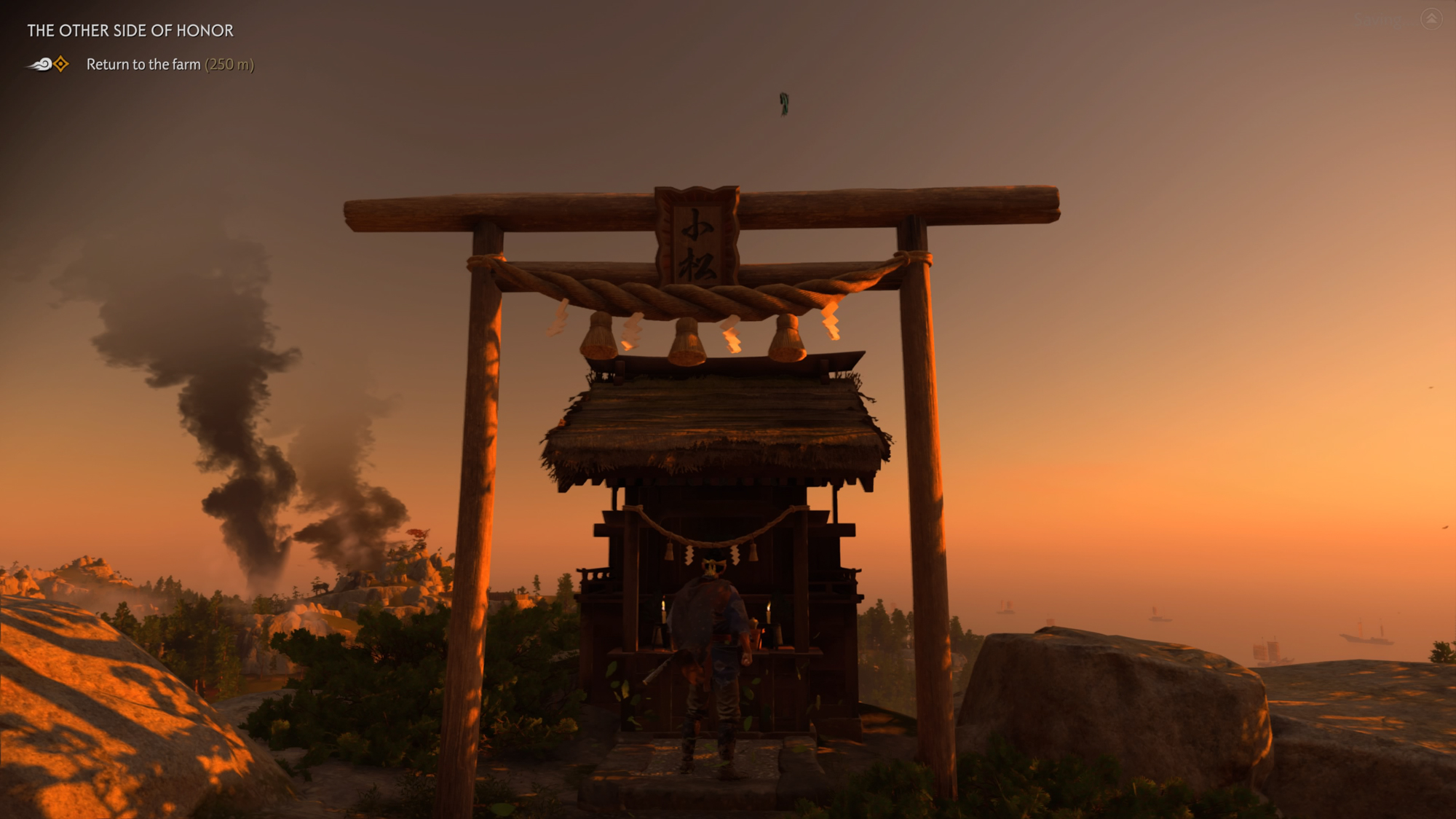
If y'all're looking for your traditional happy ending, Ghost isn't the game for you lot. For every mission I embarked upon, whether a side or a main mission, more oft than not, I was traveling to give someone some bad news past mission's end. This is war after all, merely man, there were quite a few times where I had to tell someone that their loved one wasn't coming back and that they had to make peace with it. And yeah, I know it'southward merely a game, but I watched the promise drain out of the heart of quite a few Tsushima citizens. It's crude.
And trust me, neither Jin nor your main allies are immune from the impending doom. Your marry missions are deep dives into the horrors of wars and witnessing the changes they undergo throughout the missions is nervus-wracking. But without a dubiety, Jin has the deepest transformation throughout the story. It's been three days now, and I'k even so wondering if I fabricated the right choice. And peradventure that's the best office about Ghost of Tsushima. The story it tells isn't a black-and-white morality tale; there'southward so much grey to wade through. It's a title that will stay with me for a while.
Bottom line
Overall, Ghost of Tsushima is what yous get if you throw Assassin's Creed and Tenchu: Stealth Assassins in a blender. It's got a deep, compelling story and an absolutely gorgeous world to explore with top-notch sword-fighting skills. I discovered just about every peak and valley in the game and I'm thinking about doing information technology once again. Nevertheless, I practise wish Sucker Punch hadn't put and then many otherwise useless collectibles in the game. Instead of adding filler, either give those items purpose or cutting them birthday in favor of creating a story capable of breaking into multiple threads.
But overall, if you lot're looking for a samurai title that pits you lot against a very human enemy with no right reply, then I highly advise you lot give Ghost of Tsushima some of your time.
Source: https://www.laptopmag.com/uk/reviews/ghost-of-tsushima
0 Response to "How To Purify Cursed Objects Ghost Of Tsushima"
Post a Comment